
A micro future and its larger version are two different contracts. Check the full product and size before you send an alert. One contract of each does not have the same cash effect. Read the multiplier, which tells you how price moves affect the contract’s value.
Educational software guidance. Trading involves risk. Read the financial and information disclaimers.
Step by step
- 1 Open the desired micro or standard contract in TWS.
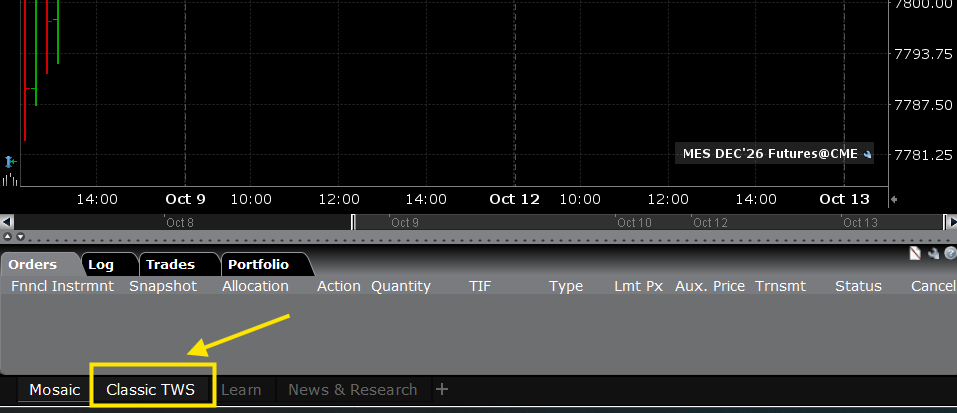
Switch from Mosaic to the Classic TWS tab at the bottom of the window. 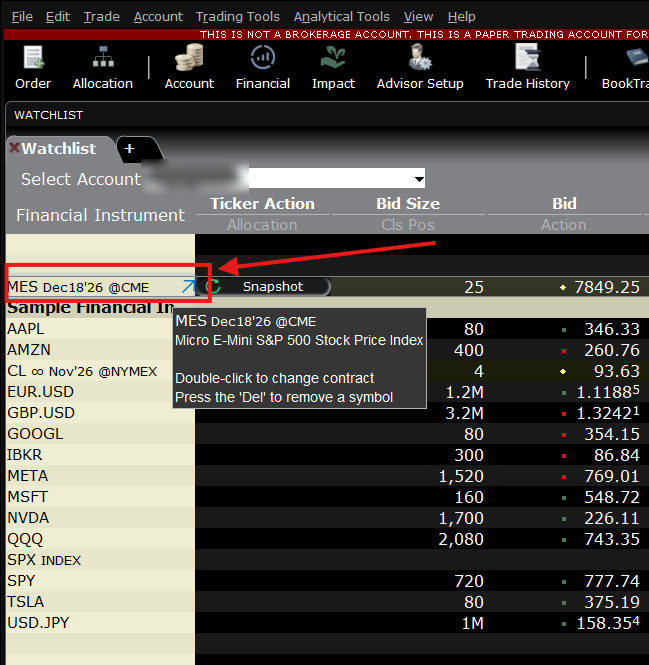
Add the symbol in the Classic TWS watchlist; hovering over it shows the contract month and the full product name. 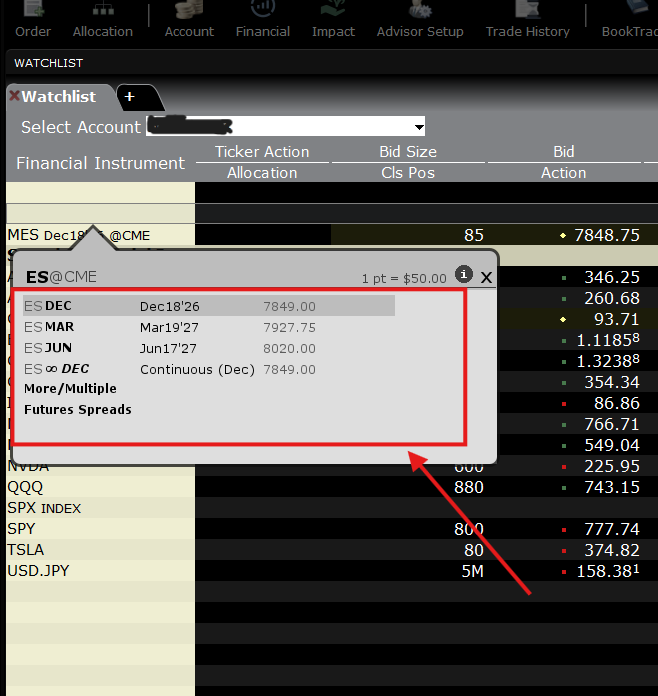
Double-click the symbol to choose the contract month from the list of available expiries. - 2 Read Description and confirm symbol, expiry, and multiplier.
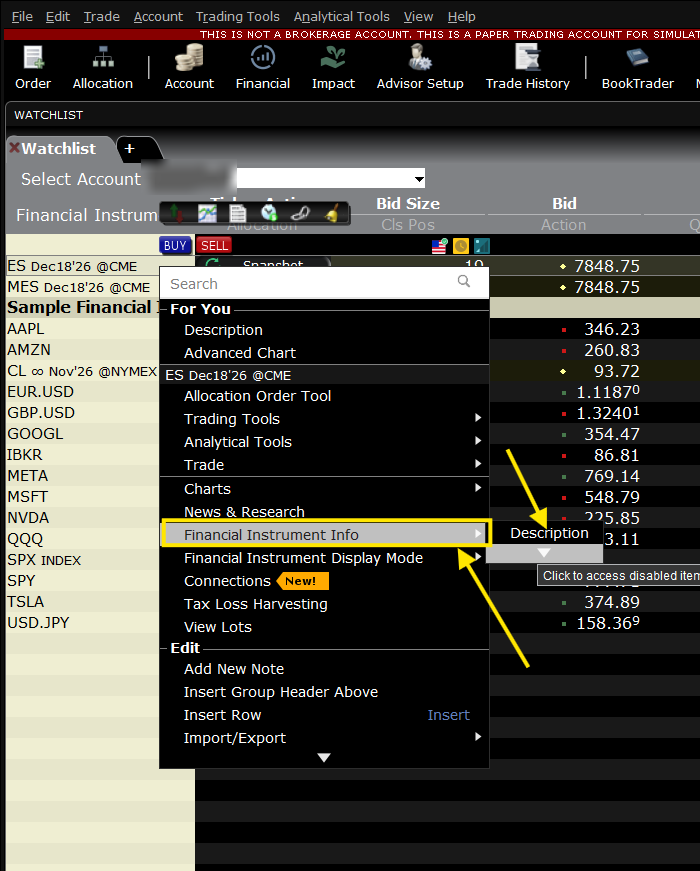
Right-click the contract and choose Financial Instrument Info → Description. 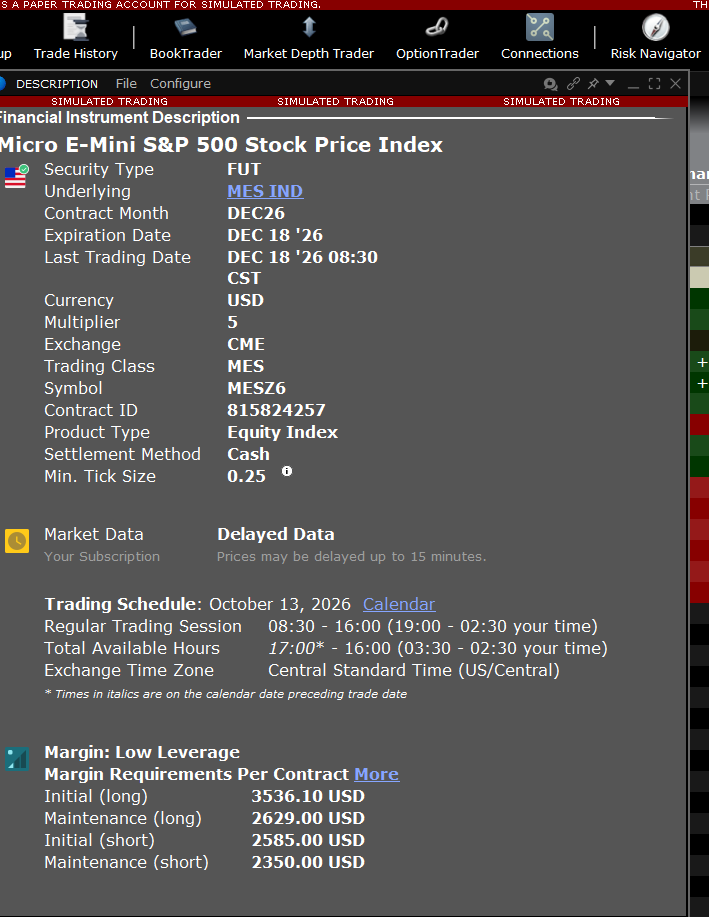
Description for a Micro E-mini S&P 500 future (MES): symbol, expiry and a multiplier of 5. 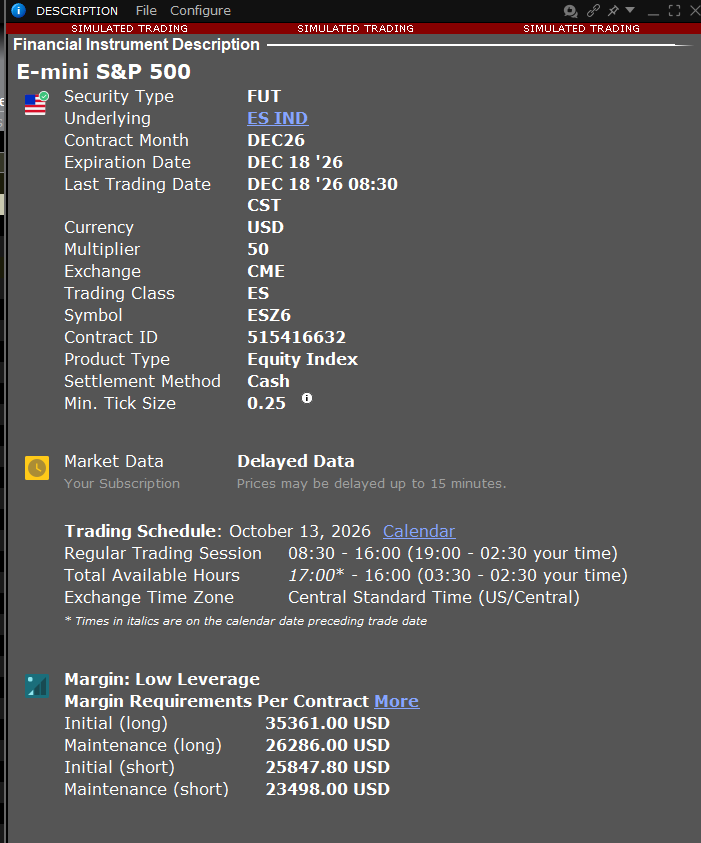
Description for the standard E-mini S&P 500 future (ES): same expiry, but a multiplier of 50 and larger margin. - 3 Compare the execution symbol in PickMyTrade with the TradingView signal symbol.
- 4 Review size, tick-based exits, and any account multiplier for the intended contract.
- 5 Preview or check the generated request in a paper workflow before using it live.
A practical example
Suppose you use a chart of a larger future to form a signal but want to trade its micro version. Write both names down. Then inspect the contract the app resolves. Check its multiplier and size before the test. One contract is not the same cash exposure across the two products. A stop expressed in price points can also have a different cash effect. Do not solve a bad symbol map by changing size until the broker record happens to look close. First choose the right product; then set the size and exit values for that product.
Screen reference
Mistake to avoid
Common questions
Can a signal on one product route to another?
Use only a documented mapping and confirm the resolved contract.
Is one micro contract the same exposure as one standard contract?
No. Check the actual contract multiplier.