Orders and exits

Add an exit bracket to an existing TWS position

Quick answer

Start from the position you already hold to add a stop and target. Do not start with a new entry. First check whether there are exits for those shares or contracts. Then use the position’s exit tool and review its side and size before sending.

Educational software guidance. Trading involves risk. Read the financial and information disclaimers.

Step by step

  1. 1 Find the exact position in Portfolio and check its size and direction.
  2. 2 Review working orders for that contract and account.
  3. 3 Open the position’s Trade menu and choose Create Target/Stop Exit Bracket where available.
  4. 4 Set the intended closing size, stop type, and target, then review the preview.
  5. 5 After a planned order, check both exits and their relationship in the broker order view.

A practical example

Suppose you already hold five shares and now want to plan a stop and target. Start from that position, not a new buy ticket. First check whether an app already placed exits for those shares. Then inspect the exit tool’s side and size. The goal is one planned way to close the existing shares, not another entry plus another set of closing orders. Check what remains after the new exit group is accepted.

Illustrative scenario, not a record of a trade placed during this review.

Screen reference

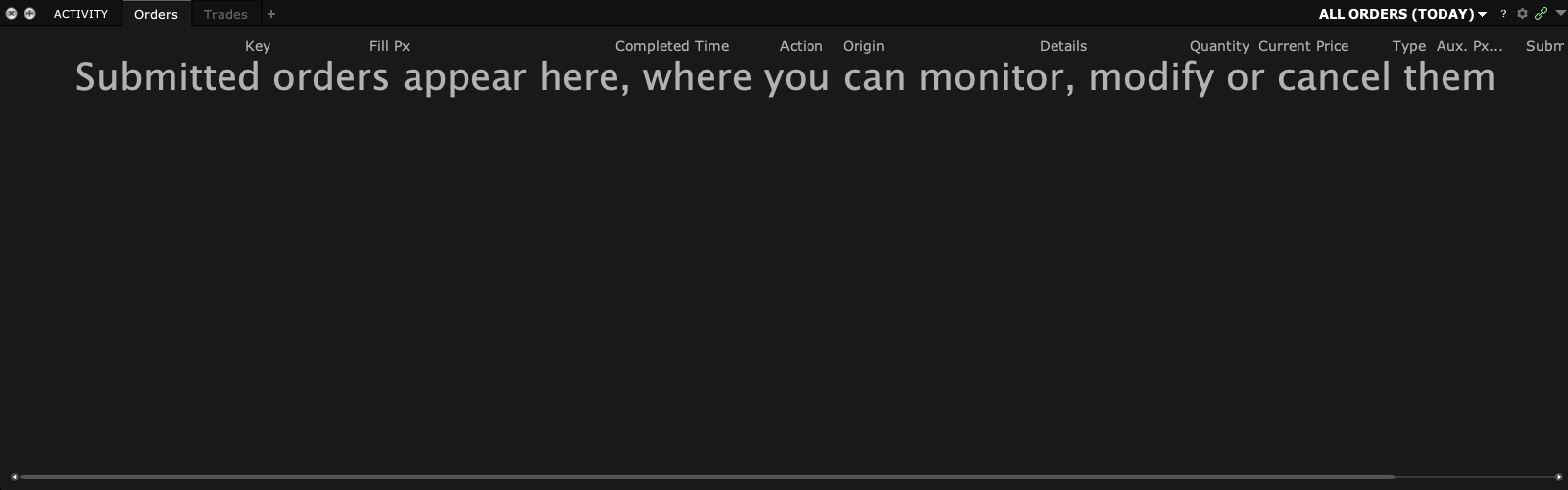
Empty TWS Activity Orders panel and Trades tab
Use Orders to inspect order state and Trades to inspect executions. This empty paper view shows the location; it does not reproduce a rejection or prove a fill. Captured in TWS paper mode on 3 October 2026. Open the image for full size.
How to confirm the result The exit group should cover the intended position once, with no unnoticed duplicate exits.

Mistake to avoid

If another app manages the position, coordinate the change with that workflow so it does not recreate or overwrite exits.

Common questions

Is this another buy order for a long position?

No. The workflow should create the intended closing-side exits. Verify side and size.

Can I use a bracket from a new entry ticket instead?

Do not accidentally submit a new entry when the task is to manage an existing position.

Financial and information disclaimers

Financial disclaimer

These guides explain software. They are for education, not financial, investment, tax, or legal advice. No example is a suggestion to buy or sell a product or use a trading strategy. Trading can lose money, including all funds you put at risk. With margin, futures, short sales, or some options, losses can exceed your starting funds. Automation can fail, send duplicate orders, or act late. Stops do not guarantee a fill or a price. Review your orders and positions, and seek advice from a qualified professional for your own needs. Paper trades, examples, and past results do not predict live results or promise a profit.

Information disclaimer

This is general help based on the sources and check date shown on the page. Screens, settings, fees, data access, and product support can change or differ by app version, account, country, and broker. The content may contain errors or become out of date; accuracy, completeness, and continuous service are not guaranteed. Check current broker and app instructions before acting. Screenshots show where controls are; they do not prove that an order test passed. This guide does not replace broker terms or risk notices. References to IBKR and TradingView identify their products and do not imply their endorsement of this guide.

IBKR risk disclosures · IBKR paper-trading limits · SEC guidance on automated investment tools

PickMyTrade help · Independent guidance for Trader Workstation and the desktop integration. TWS images show paper trading. Other applications are named in the image captions. Settings and availability can vary by version and account.

Automate TradingView alerts to Interactive Brokers

See the IBKR integration