
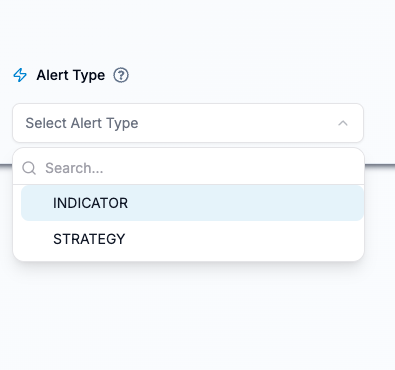
A script alert uses a saved version of its setup when created. Editing the chart does not necessarily update that running alert. Recreate the affected alert with the intended settings and avoid leaving the old one active.
Educational software guidance. Trading involves risk. Read the financial and information disclaimers.
Step by step
- 1 Open the intended chart symbol and timeframe.
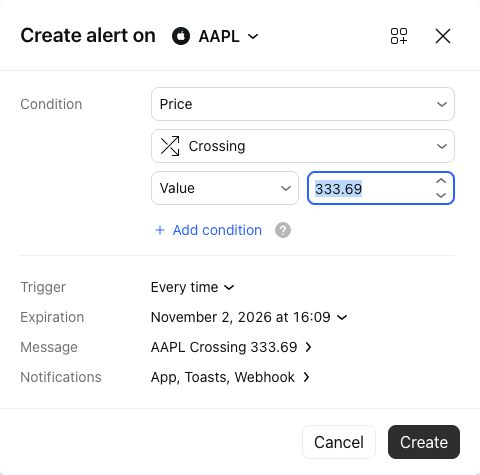
- 2 Confirm the script version and inputs you want the alert to use.
- 3 Compare those settings with the existing alert setup.
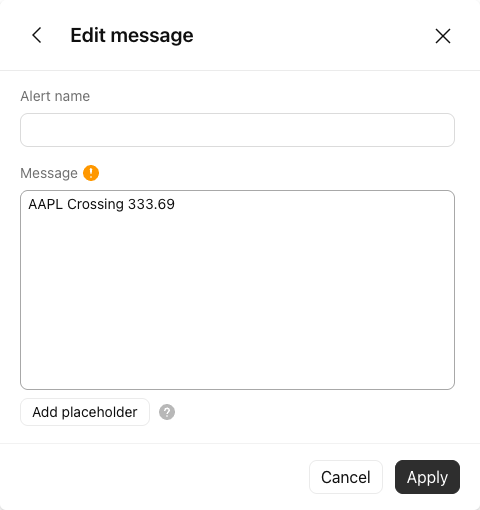
- 4 Create the replacement alert with the correct generated message and destination, then remove or disable the old alert with care.
- 5 Test one paper signal and check that only the intended alert fired.
A practical example
You change a script input from one value to another on the chart. The running alert may still use the old saved copy. Create the new alert from the setup you now want, then remove the old one if it should stop. Test one event and check which alert ID fired. A chart that looks right is not proof that a server-side alert now uses the same inputs. Keep the alert setup with your test notes so a later change is easy to trace.
Screen reference
Mistake to avoid
Common questions
Do indicator input changes update existing alerts automatically?
TradingView documents alert snapshots; recreate when the saved setup needs to change.
Should I keep both alerts during migration?
Only if you intentionally want both; otherwise avoid duplicate execution.